
Gunung Kidul University Initiative Gunungkidul Karst International Conference to Develop Geopark Sustainability in the Digital Era
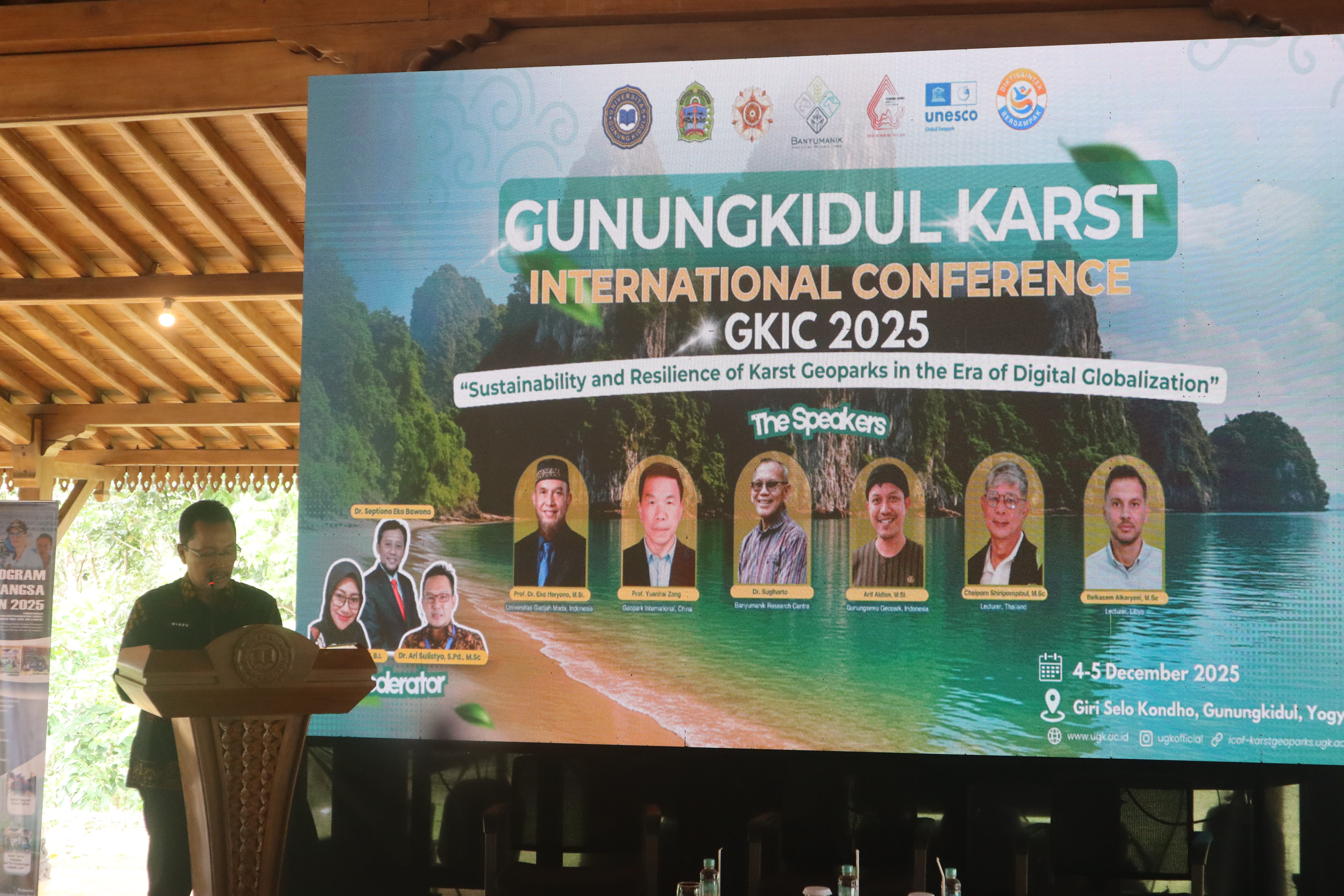
Gunungkidul December 4, 2025 - Gunung Kidul University (UGK) officially held “Gunungkidul Karst International Conference (GKIC) 2025”. This conference raised the theme "Sustainability and Resilience of Karst Geoparks in the Era of Global Digitalization.” The conference, held on Thursday, December 4, 2025, took place offline at Giri Selo Kondho Gunungkidul Regency and also conducted by daring via zoom meeting. It brought academics, researchers, geopark practitioners, and stakeholders to discuss the future challenges and opportunities for karst ecosystems amidst the acceleration of digital technology.
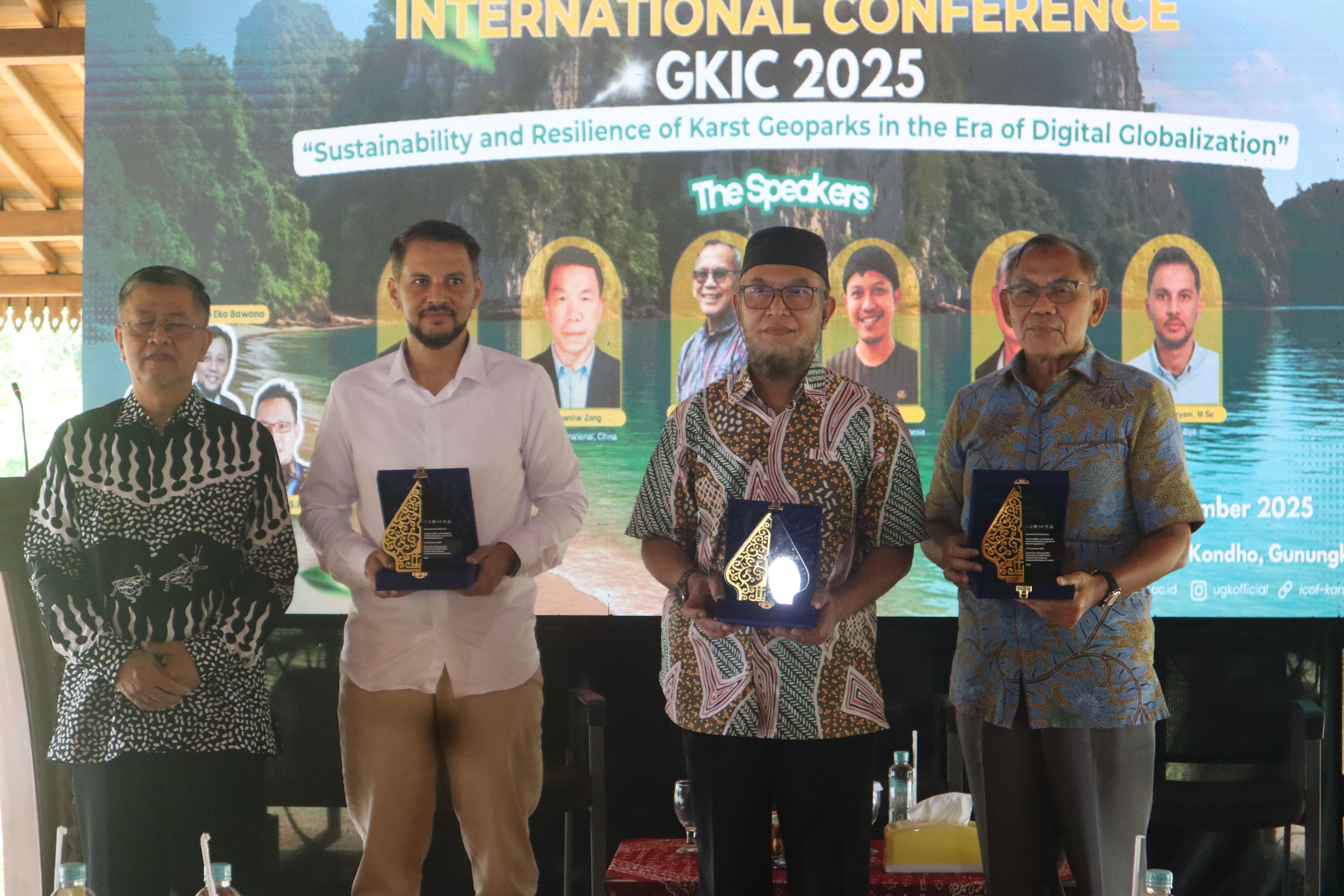
The conference was opened by the Rector of Gunung Kidul University, Dr. Sugiyanto, S.Sos., M.M., who enthusiastically welcomed the event. The Rector emphasized the important role of local educational institutions in connecting research with regional conservation needs."Through GKIC 2025, we want to ensure that research related to Geopark conservation is conducted inclusively and prioritizes collaboration between various parties to find solutions to challenges in this digital era." Said Dr. Sugiyanto in his speech.
As the opening speaker, Prof. Dr. Eko Haryono, M.Si., presented a comprehensive analysis of the karst landscape of Mount Sewu. He highlighted the condition of water resources, potential geomorphological hazards, and evolving land use patterns. He recommended sustainable spatial planning to prevent long-term ecological impacts from developing the karst area.
The next speaker, Prof. Yuanhai Zang, emphasized the importance of geography, biography, and cultural diversity in shaping the identity of karst geopark and explained how the resilience and evolution of geoproducts can strengthen the local economy. Complementing this view, Dr. Sugiharto highlighted the potential of karst areas from a socio-economic perspective, particularly in relation to community vulnerability, and poverty levels. Both agreed that geopark management must consider scientific, social, and economic aspects in a balanced manner to ensure sustainability.
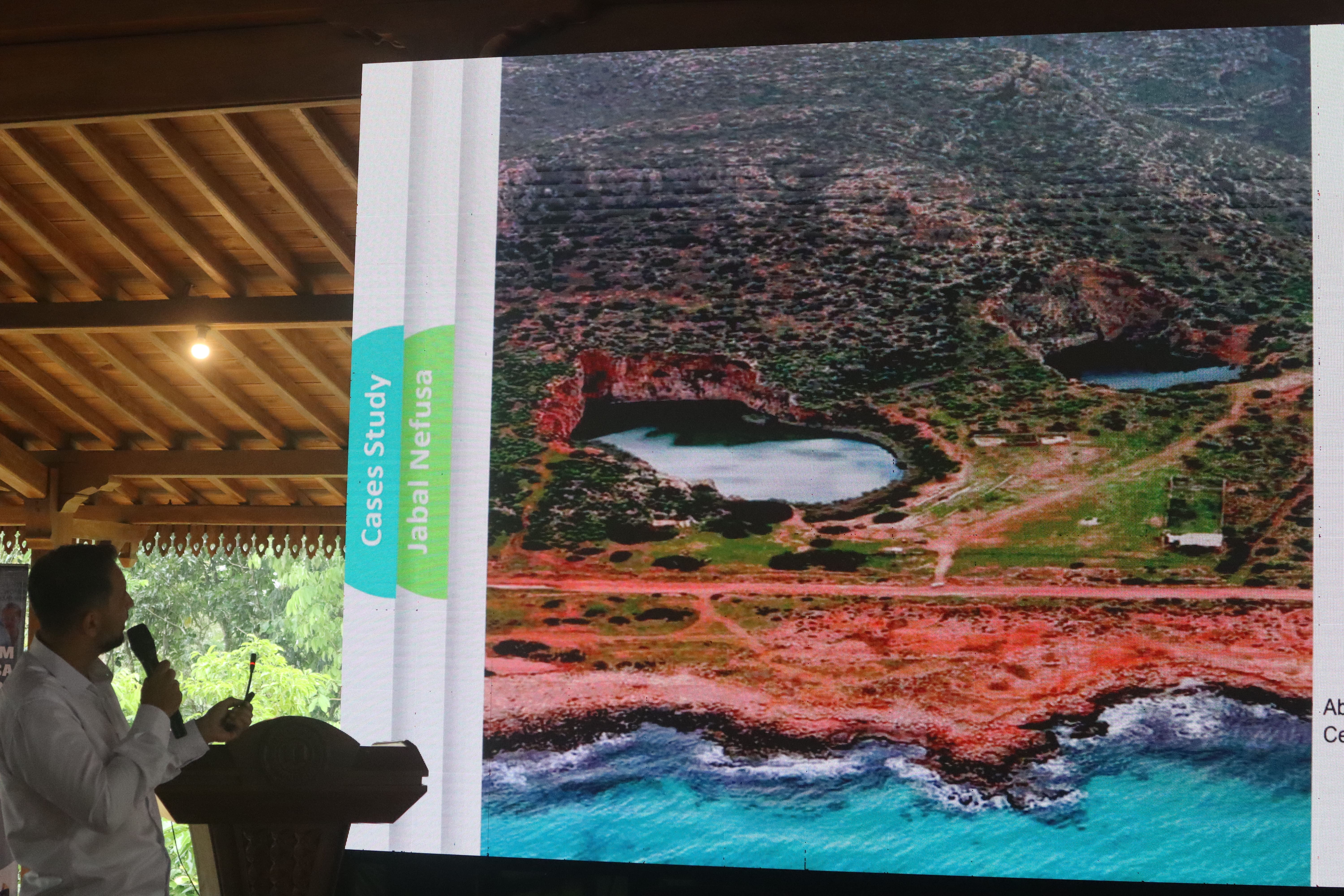
Arif Adilan, M.Si highlighted the importance of sustainable geotourism and community empowerment in the Gunungsewu area. Meanwhile, Shriprompipul, M.Sc., explained the role of Thailand's national policy in the management and protection of cave areas. The final speaker, Belkassem Alkaryani, M.Sc., explained Libya's geographic characteristics that shape its geotourism potential. Overall, the three presentations emphasized the importance of managing geotourism on a conservation basis.
This conference affirmed the University of Gunung Kidul's commitment to actively participating in sustainable karst research and conservation. GKIC 2025 is expected to foster a broader understanding of the urgency of integrated karst geopark management. This serves as the foundation for more effective, sustainable, and scientifically research-based karst area management.